
So the untamed landscape of Patagonia has caught your eye and you’re wondering how to plan a trip to Patagonia?
The region is massive. It spans the entire southern tip of South America across Chile and Argentina. And it’s spectacularly remote charm, while attractive, is exactly what brings some overwhelm when you start figuring out a trip there.
I felt exactly the same way before my trip to Patagonia. I spent 3.5 weeks there, checking off world-famous glaciers like Perito Moreno, staying at traditional ranches in El Calfate, and trekking the famous W Trek in Torres del Paine.
And because I felt your struggle, I’m here to help. I’ll walk you through every single detail you need to plan a trip to Patagonia, in the right order.
By the end of this Patagonia travel guide, you’ll:
- have a solid visualization of the region
- know the difference between Chilean and Argentinian Patagonia
- feel clear on exactly how to get there.
We will cover the ideal lengths of time, when a group tour makes sense versus going solo, and the experiences I think every person who plans a trip to Patagonia should have on their list.
Quick Planning Overview
| Best time to visit | November to March (summer/spring) |
| Minimum time needed | 1 week+ |
| Main entry hubs | Buenos Aires (Argentina) or Santiago (Chile) |
| Getting around | Buses + domestic flights; rental car optional |
| Mid-range daily budget | ~$150-250 USD/day (accommodation, food, activities) |
| Must-do experiences | Perito Moreno Glacier, W Trek, Estancia stay, Laguna de los Tres |
| E-Sim to stay connected | Airola |
Where to Go in Patagonia
Let’s start with where to go. This will dictate how you get there, how many days you might need, and more.
Because Patagonia is so large, I highly recommend choosing a few key destinations and building your itinerary around them. Here is an overview of the core spots to consider.
El Calafate (Argentinian Patagonia)

El Calafate is one of the most accessible destinations in Patagonia. It is a short, direct three-hour domestic flight from Buenos Aires.
It is home to the famous Perito Moreno Glacier, part of the second-largest ice field in the world next to Greenland. Trekking across the glacier itself with crampons and drinking right from streams pouring down its crevasses was a highlight of my entire life! There are also boat trips that take you right up to the glacial wall.
El Calafate is also where I had some of my absolute favorite experiences of the entire trip: the estancias. Estancias are traditional Argentinian farms, typically cattle ranches, where the family home has been converted into a hotel.
Creaky hardwood floors, cozy fireplaces, horseback riding (the best in Argentina in my opinion), farm demonstrations, and a traditional lamb lunch cooked on an open fire.
This is where I actually learned to ride a horse properly, beyond just sitting on one and letting it follow the others. I herded sheep in for the night alongside a real Argentinian gaucho. My personal favorite was Nibepo Aike, and honestly, staying at an estancia is reason enough to visit El Calafate on its own.
El Chalten (Argentinian Patagonia)
El Chalten is typically combined with El Calafate because it is only a 2.5-3.5 hour bus ride away. This is the spot if you love long day hikes (we are talking 20+ kilometers).
It is home to some of the best day hikes in all of Patagonia, including Laguna de los Tres and Laguna Torre. I spent four full days here, completed both of those treks, did a shorter 5km day hike, and still had one rest day to explore the town.
El Chalten also has free national park entry.
Puerto Natales + Torres del Paine (Chilean Patagonia)
Puerto Natales is the gateway to Patagonia in Chile and the jumping off point for Torres del Paine National Park.
Torres del Paine is often considered the TOP destination in all of Patagonia, known for its “three towers” that are shaped unlike any mountain range I’ve ever seen. It has bright blue glacial lakes (we’re talking the colour of a turquoise crayon), some of the best hiking in the world, and some unique eco hotels.
It is Chilean Patagonia’s base for anyone who loves to hike, whether you are doing day trips into the park or the famous W Trek (4-6 days) or the O Circuit (9-11 days).
Punta Arenas (Chilean Patagonia)
Punta Arenas sits about 3 hours south of Puerto Natales. This is the destination if you want incredible wildlife. Half-day boat tours take you to Magdalena Island to walk among thousands of Magellanic penguins and spot sea lions. It is also right on the water, so there are tons of marine life spotting opportunities.
Ushuaia (Argentinian Patagonia)
Ushuaia is the southernmost city in the entire world. It sits at the very tip of South America and is part of Patagonia. The town itself is stunning, with lots of marine-based tours and access to Tierra del Fuego National Park.
Tierra del Fuego is one of the more rustic, less-visited destinations in Patagonia. It has glaciers, harbor views, and a real end-of-the-world feeling. There aren’t as many people hiking here so you can get really immersed into nature.
Bariloche + The Lake District (Northern Patagonia)
The Lake District sits in the northern part of Patagonia, centered around Bariloche. The mountain scenery here is softer compared to the stark drama of the south. But they have great skiing in winter and great hiking in summer. If you want something slightly different, it is a beautiful addition to a longer patagonia travel itinerary.
For a more complete list of the top things to do across all of these destinations, I have a dedicated list of the 23 top things to do in Patagonia, covering those in much more depth so this article does not turn into a 10,000-word monster.
How Much Time Do You Need in Patagonia?
Ideally you could spend weeks and weeks here, but we don’t all have unlimited time off, do we?
At minimum, I would say you need a week. Coming from North America, for example, flights to Buenos Aires take roughly 14-16 hours with a connection, followed by a 3-hour domestic flight to El Calafate. That travel time alone makes a shorter trip feel rushed.
With a week, you can comfortably cover one or two locations that are close together. If you are working with a Patagonia itinerary of 7 days, combining El Calafate and El Chalten works perfectly, as does Puerto Natales with Torres del Paine, or Ushuaia on its own.
With 10 days, I would still stick to two destinations but go deeper. Three to four days in El Calafate, spending two to three of those at an estancia and one day at the glacier, then four days in El Chalten to do the big hikes, is a really satisfying itinerary.
With two weeks, you can start adding a third location. El Calafate, El Chalten, and Torres del Paine works perfectly because there is a direct bus from El Calafate to Puerto Natales.
And if you have more time, keep adding. General rule of thumb: allow at least 3-4 days per destination to make it worthwhile. If you’re curious, I have all the details of my complete 3 weeks in Patagonia itinerary here.
👉 Read More: My Complete 3 Week Itinerary in Patagonia
How Much Does a Trip to Patagonia Cost?
I will not pretend it is cheap, but I truly did not find it as expensive as people make it out to be. It is pretty comparable to traveling in parts of Europe.
You can absolutely go full luxury here, but there are hostels, affordable buses, and the food is actually really cheap, especially in Argentina.
Accommodation
Hostel dorm beds in El Calafate and El Chalten run about $15-25 USD per night. Airbnbs are a great option and run around $70 USD per night for a private space, which I split with my mom making it even cheaper.
Even the more “luxurious” experience I had at Nibepo Aike estancia was affordable. It seemed really expensive at first. But then I realized it was all inclusive, meaning every single meal AND activities. We went horseback riding three times, went hiking, did farm demonstrations and had a lamb bbq all included. That made it a lot more mid-range in budget.
Check current rates at nibepoaike.com.
National Park Entry Fees
You will pay entry fees at most parks. These need to be paid in cash at some locations, so read the tips section below on currency before you go.
- Torres del Paine National Park: Current park entry rates here.
- Los Glaciares / Glaciares National Park (Perito Moreno area): Current park entry here.
- Tierra del Fuego National Park (Ushuaia): Current park entry here.
- El Chalten: No entry fee.
Tour Costs
Tours is where you see Patagonia get pricier.
Trekking on Perito Moreno Glacier is expensive but was one of the best experiences of my life. I did the minitrekking version (which included about 30 – 45 minutes on the actual glacier, plus boat rides, walking around, transportation). It cost me about $400 USD.
Penguin tours from Punta Arenas to Magdalena Island run about $140 USD for a half-day.
Then there’s the multi-day treks. I did the W Trek with G Adventures because I was solo travelling that part of my trip and the logistics of booking the refugios seemed like a nightmare. I have 0 regrets on this.
The tour included all camping, food, and guides. Read my honest G Adventures W Trek review for the full breakdown, and my guide to doing the W Trek with a group tour vs independently if you want to compare options.
🤩 Mini Trekking on Perito Moreno Glacier Was Legit Lifechanging
Food Costs
Food is one of the most budget-friendly parts of visiting Patagonia, particularly in Argentina. A casual restaurant meal runs about $10-15 USD. A proper Patagonian lamb dinner with wine is around $20-30 USD per person. Empanadas are under $1 each and are everywhere.
Currency and Tips
Do not take out Argentine pesos before arriving in Argentina.
Before my trip, I took out a big amount of cash because I was unsure about card acceptance in smaller towns like El Calafate and El Chalten. Big mistake.
Because of Argentina’s recent economic situation, there is something called the blue dollar rate, which means if you pay by credit card or exchange USD cash inside Argentina, your money goes roughly 8 times further than if you exchange before arriving. We ended up losing about $600 CAD in value because we converted money at home before the trip.
If you are worried about having cash for more remote travel, just bring USD or withdraw from ATMs in El Calafate or Buenos Aires once you arrive.
In Chile, credit cards are widely accepted. ATMs in smaller Chilean Patagonia towns can run low on cash or charge high withdrawal fees. Stock up in larger towns like Puerto Natales or Punta Arenas before heading into more remote areas.
How to Get to Patagonia
You will start with one of the two main international hubs: Buenos Aires for Argentinian Patagonia, or Santiago for Chilean Patagonia. Which you fly into depends entirely on your itinerary.
Flights into Argentinian Patagonia
From Buenos Aires (Ministro Pistarini International Airport, EZE), there are frequent, affordable domestic flights to the main Patagonia hubs:
- El Calafate (FTE): 3 hours. Direct flights run regularly from Buenos Aires. This is your starting point for Perito Moreno Glacier and estancias.
- Ushuaia (USH): 3.5 hours. Direct from Buenos Aires.
- Bariloche / Lake District (BRC): 2 hours. San Carlos de Bariloche Airport (officially Teniente Luis Candelaria Airport) serves the Lake District.
Flights into Chilean Patagonia
From Santiago, fly into Punta Arenas (PUQ) or Puerto Natales. It is a 3h15min bus ride between those two cities.
Domestic flights within Argentina and Chile are decently affordable and run frequently. I would recommend booking through LATAM or Aerolíneas Argentinas.
How to Get Around Patagonia
It’s actually way easier to get around within Patagonia than most people assume.
For example, there is a truly decent bus system connecting the main destinations. I did not rent a car for my entire three and a half weeks and had no issues getting around. For booking buses, I recommend Busbud.
Booking in advance makes sure you are not showing up hoping for a last-minute spot, especially in peak season.
Key Bus Journey Times
- El Calafate to El Chalten: 3 hours. Up to 11 daily departures in peak season.
- El Calafate to Puerto Natales: 5-6 hours including the border crossing.
- Puerto Natales to Punta Arenas: 3h15min.
For longer distances between regions, like getting from the Lake District to El Calafate, or getting to or from Ushuaia, you will need domestic flights. Ushuaia is far enough that busing from any other Patagonia hub is not really practical.
Renting a Car in Patagonia
Renting a car is not necessary for most Patagonia trips. The bus system or domestic flights handles the main routes well. That said, a rental car can be enormously helpful if you are visiting the Lake District around Bariloche, since buses between smaller destinations there run less frequently.
A car is also worth considering if you are doing the Carretera Austral, the famous highway through remote Chilean Patagonia that passes through national parks like Bernardo O’Higgins National Park and Kawésqar National Park.
These are part of Chile’s Route of Parks, and getting to them without your own vehicle is really complicated.
IMPORTANT things to know if you rent a car:
- Roads are generally safe, but 4WD is recommended for Chile and rural areas.
- Fuel stations can be far apart. Fill up whenever you see one.
- Renting in one country and returning in another is either extremely expensive or not allowed. If you plan to cross borders in your rental, request a cross-border permit when booking.
- Driving in towns is easy. Some remote routes are gravel or unpaved, so know what you are getting into.
💡If you are road tripping in remote areas, I would highly recommend bringing a satellite phone. There is virtually no cell service as soon as you leave the main cities.
I used a Garmin inReach. The nice thing with this one is you can activate month by month so you only pay for the time you need it. You can send check-in messages to family and have full SOS capability.
Border Crossings Between Chile and Argentina
If you are traveling between Chile and Argentina by land, the most common crossing is between El Calafate and Puerto Natales. Here is what you need:
- A valid passport that does not expire within 6 months (you needed that anyways to get in the country)
- Any necessary visa paperwork. Many nationalities, including Canada, the US, and the UK, do not need a visa for tourist stays under 90 days in Chile. Check your nationality’s requirements here.
- A completed digital affidavit. Fill it out at dj.sag.gob.cl before you cross.
- No produce or animal products. This is important. Even if you claim items on the form, they will be taken from you. If you do not claim something and are found with it, you can get a serious fine. I had bananas in my bag but declared a few things I was unsure about like granola, and they just threw them out. When in doubt, claim it. They checked everyone’s bags regardless so no harm in claiming.
Should You Do a Group Tour in Patagonia?
If you do not want to handle domestic flights, bus bookings, accommodation across multiple destinations, and all the other logistics that go into a Patagonia trip, then a group tour is a great option.
There are a lot of well-run tours throughout Patagonia. I am a big fan of G Adventures in particular.
If you are sticking to one or two destinations and have a decent amount of time, I do not think a tour is necessary unless you just want everything handled for you.
For solo travelers specifically:
The W Trek is busy enough that doing it alone is totally fine, and I would feel comfortable recommending it. For the O Circuit, I would consider a group tour. Fewer people are on those sections of trail, and hiking alone for 9-11 days in that level of remote feels less ideal.
On solo travel safety:
I traveled solo through most of Patagonia and felt completely safe the entire time. Most people in tourism areas speak English. Google Translate handled anything else. I found visiting Patagonia as a solo woman truly manageable.
Where to Stay in Patagonia
There are great options across all budget levels. Here is a quick breakdown by destination.
El Calafate
If you are staying in El Calafate, I highly recommend staying at one of the estancias. I have a full guide to the best estancias near El Calafate with everything you need to know.
A key thing to know with these – they are on the outskirts of the city. But transportation to and from is usually included with your stay and is part of the adventure.
For budget travelers: America Del Sur Hostel – Has an amazing view and big glass windows in the common space.
Mid Range: Nibepo Aike Estancia (consider the pricing includes all your meals and activities during your stay, making it more mid-range).
Luxury: Estancia Christina Lodge – This estancia takes you in a boat trip across Lago Argentina to get there, is in the remote wilderness, has stunning rooms, and offers epic horse riding journies.
El Chalten
I have a complete detailed list of the best places you can stay in El Chalten in a separate guide, with multiple options for budget, mid-range and luxury budgets. As well as an overview of where in the town you should stay.
Puerto Natales and Torres del Paine
For budget travelers: Hostal Lili-Patagonicos – So. Dang. Cozy. That’s all I have to say.
Mid Range: I stayed in this lovely Airbnb with huge windows, however, it is a long walk out of town. I actually recommend staying at this hotel I stayed at instead – Capitan Eberhard. It’s by the water, basic but really comfortable and has good breakfast.
Luxury: Exploras en Torres del Paine (All Inclusive) – This place is the true definition of adventurous luxury in Patagonia.
If you are doing the W Trek or O Circuit, you will also stay in refugios or camp inside Torres del Paine National Park itself. Read my guide to 36 things to know before hiking the W Trek before you book anything.
Ushuaia
For budget travelers: Antarctica Hostel – Beautifully designed, excellent community, and fantastic location.
Mid Range: Hosteria y Restaurante America – So cozy with an on-site restaurant and some of the best ratings in Ushuaia.
Luxury: Arakur Ushuaia Resort & Spa – Stunning views and location, hot tubs, big gorgeous windows.
What to Do in Patagonia
I traveled to Patagonia as a hiker and trekker, but I met people who came to visit Patagonia for all different reasons. Some came for luxury estancia stays. Some came for iconic scenery without the long hikes. Some, like me, wanted to do it all.
Some of the best things to do in Patagonia include:
- Hiking Laguna de los Tres in El Chalten. It is arguably one of thetop hikes to do in Patagonia.
- Visiting and/or trekking on Perito Moreno Glacier in El Calafate. One of the most accessible glaciers in the world to actually get on.
- Seeing the three towers viewpoint in Torres del Paine National Park.
- Seeing the king penguins from Punta Arenas on a Magdalena Island tour.
- Taking a boat tour on the Beagle Channel from Ushuaia.
- Hike the W Trek or O Circuit in Torres del Paine National Park.
- Staying at an estancia in El Calafate. One of my favorite travel experiences ever.
- Visiting the marble caves off the coast of Chilean Patagonia (Capillas de Marmol).
For the full list with details on each activity, check out my guide to the 23 best things to do and see in Patagonia.
👉 Read Next: The 23 TOP Things to Do in Patagonia
Best Time to Visit Patagonia
Patagonia is in the southern hemisphere, so seasons are flipped from North America and Europe. Summer runs December to March, winter runs May to September, with shoulder seasons in between.
The best time for the most reliable weather is summer, December to March.
This is peak season, and the parks will be busier.
That said, there is real value in visiting in shoulder season. I went in November, which is spring, and had really great weather. There were noticeably fewer people in the parks, which I loved.
Shoulder season has more variable conditions, but even in summer the weather in Patagonia is unpredictable.
A lot of people describe experiencing all four seasons in a single day in Patagonia. Even in the summer, snow at higher altitudes is possible, and the wind is truly legendary. “Patagonia hair” is a real thing. Your hair becomes so tangled and wind-knotted that it takes serious effort to get a brush through it.
No matter when you visit, pack for all conditions. For a month-by-month breakdown, see my guide to the best time to hike in Patagonia.
👉 Read Next: When Is the Best Time to Hike in Patagonia
Patagonia Packing List: What to Bring
No matter the time of year, packing the right layers is the most important thing you can do. Here is what I would not leave home without.
- A windproof outer layer. This is non-negotiable. The wind in Patagonia is unlike anything I have experienced anywhere else.
- A warm fleece. You will be adding and removing layers constantly throughout the day.
- Multiple layers. On a long day hike you might go from wearing everything to just a t-shirt within a few hours.
- Hiking boots. Even if you are not doing big treks, boots are useful for estancia activities and uneven terrain.
- A refillable water bottle. Water in Patagonia is extremely clean. You can fill up from streams inside the national parks.
- Sunscreen. UV rays are strong even when it is cold and overcast. Do not skip it.
Patagonia Tips: Essential Things to Know Before You Go
Currency and Cash
- Exchange a small amount of cash when you arrive and use your credit card for everything else. Most things are payable by card in the tourism areas.
- Pay park entry fees in cash. Some Argentine national park entrances require Argentine peso cash, so withdraw pesos at an ATM in town before heading to the park.
- Do not exchange money before arriving in Argentina. Use ATMs or exchange USD inside the country to get the better exchange rate.
Weather and Connectivity
- Take what the weather apps tell you with a grain of salt. Conditions change constantly in Patagonia, often within a single hour.
- There is limited cell coverage between towns. Torres del Paine has no cell signal or Wi-Fi inside the park. Longer day hikes like Laguna de los Tres also have no signal.
- Wi-Fi is available in most towns, hostels, and hotels. I found the speeds pretty normal throughout.
- If you want a travel SIM, an eSIM is the easiest option, especially if you are crossing between Argentina and Chile.I always travel with these Airola E-Sims now.
- Download offline maps before you go. Maps.me and Gaia GPS both work well.
Language and Safety
- You can get by with English in most tourist areas. In smaller towns like Puerto Natales, some locals only speak Spanish. The Google Translate app is enough to get by.
- Patagonia is very safe to travel, including solo and female travelers. Read my guide to solo female travel in Patagonia for more on that.
- Popular hikes have lots of people on them. Hiking Laguna de los Tres or the W Trek alone is totally fine.
- Tap water is safe to drink. You can also fill up directly from streams in the national parks.
Booking In Advance and Planning Tips
- If you are traveling in peak season (December to February), book everything in advance. Especially refugios inside Torres del Paine. These sell out six months or more ahead.
- Add tipping to your budget. Tipping is standard in Argentina at restaurants and for guides and porters. Around 10% is typical.
Your Next Steps For Planning Your Trip to Patagonia
That is everything you need to get started planning a trip to Patagonia. From here, the next move is narrowing down exactly where you want to go and what you want to do.
If you have not decided between the two sides yet, my breakdown of Chilean vs Argentinian Patagonia will help you figure out which one suits your travel style.
Once you have a rough sense of your destinations, I would head to the top things to do in Patagonia to start building your activity list, and the best hikes in Patagonia if hiking is your main reason for going.
If the W Trek is on your list, start with the 4-day W Trek itinerary and thev36 things to know before you go. Those two together will tell you everything you need.
Drop any questions in the comments. I am happy to help you figure out the right trip for you.
Read More about Planning Your Trip to Patagonia:
- How to Plan a Trip to Patagonia: Step-by-Step
- The Best Time to Hike in Patagonia: Month by Month
- The Best Horse Riding in Patagonia: Guide and Review
- My Honest Review of Mini Trekking Perito Moreno Glacier
- Where to Stay in El Chalten – Budget to Luxury Hotels
- The 6 Best Estancias in El Calafate: With Reviews
- Which is Better? Chilean Patagonia vs Argentinian Patagonia
- 27 Best Hikes in Patagonia: Day Hikes and Treks
- 23 Top Things to See in Patagonia (Plus Trip Guide)
- The Ultimate 3 Weeks in Patagonia Itinerary
Plan Your Trip - My Favourite Resources
📱 Stay Connected Without Expensive Roaming Fees
I never travel without an e-Sim now. You pay a fraction of roaming fees, and simply download the e-Sim to your phone instead of switching SIM cards. The service I always use is Airola.
🏠 Book Your Accommodation
I always use Booking.com to find and book the best hotels at the cheapest rate. For cheap and social options, I love using Hostelworld - they also have private rooms.
🏄♀️ Book Your Tours and Excursions
I book adventure tours anywhere in the world through Manawa. My second favourite is Viator - it has the largest selection of tours with local operators and offers flexible cancellation.
Need Help Planning Your Next Adventure?
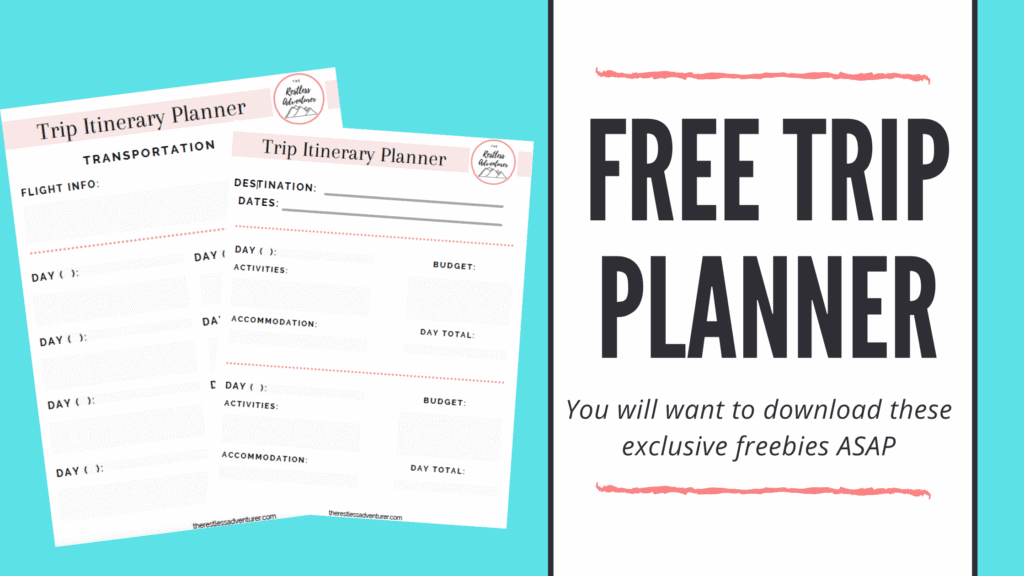
Join my newsletter to get access to your FREE exclusive trip planner + more awesome adventure travel content by me!
No spam and you can unsubscribe anytime!